A vaccine fridge alarm can make everyone nervous.
The fridge might be too warm. It might be too cold. The power may have failed overnight. Someone may have left the door open. Or the data logger may show that the temperature went outside the safe range and then returned to normal before anyone noticed.
The first question is usually:
“Can we still use the vaccines?”
But that is not the first decision to make.
The first job is to stop the vaccines being used by mistake, keep them stored correctly, collect the temperature information, and report the breach to the right place.
In Australia, vaccines are generally stored between +2°C and +8°C. The Australian Government says vaccines exposed below +2°C or above +8°C should not be used without further advice, and should not be discarded until advice is received. For National Immunisation Program vaccines, that advice comes from the relevant state or territory health authority. For privately purchased vaccines, it usually comes from the manufacturer or supplier.
Step 1: Stop using the vaccines
As soon as you identify a possible temperature breach, stop using any stock that may have been affected.
This applies even if the fridge is now back in range. It also applies even if the vaccines look normal. A vaccine can be affected by heat or freezing without looking different.
The aim is to prevent someone from accidentally administering a vaccine before it has been assessed.
Step 2: Isolate the affected stock
Keep the affected vaccines separate from usable stock.
In many cases, this means leaving them in the vaccine fridge but physically separating them from other vaccines. If the fridge cannot hold the correct temperature, move them to another monitored purpose-built vaccine fridge or an appropriate validated cooler.
Do not put them on the bench while you work out what to do. Do not move them into a domestic fridge. Do not leave them at room temperature.
NSW Health tells providers to quarantine vaccines in the fridge, label them “do not use”, avoid discarding them until advice is provided, and make sure the vaccines can continue to be stored between +2°C and +8°C.
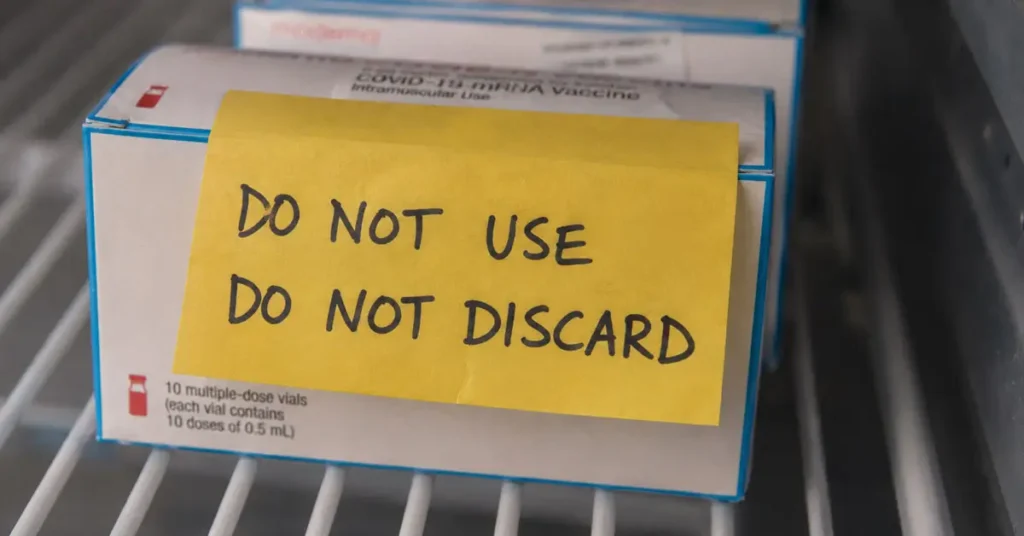
Step 3: Label them clearly
Put a clear sign on the vaccines or fridge section:
Do not use / Do not discard
This wording matters.
“Do not use” stops staff from administering the vaccines.
“Do not discard” stops someone from throwing them away before a proper assessment has been made.
Victoria’s cold chain breach process uses the same principle: isolate the vaccines and place a sign on the vaccine refrigerator saying not to use or discard the vaccines until further notice.
Step 4: Keep the vaccines between +2°C and +8°C
This can feel counterintuitive. If the vaccines may already be compromised, why keep them cold?
Because they still need to be assessed. Letting them warm up further can make the situation worse and may make assessment harder.
So the rule is simple: while you are waiting for advice, keep the affected vaccines between +2°C and +8°C.
Queensland Health gives the same instruction for affected government-funded immunisations: quarantine them, label them “DO NOT USE”, and keep them stored between +2°C and +8°C in a purpose-built vaccine refrigerator.
Step 5: Download the data logger
The person assessing the breach will need more than “the fridge alarm went off”.
They will need to know what actually happened.
Download the temperature data logger report and save the file. If your fridge has an inbuilt logger, download the report from the fridge system. If you use an external data logger, download that report instead.
The important details are:
- How high or low the temperature went.
- How long the fridge was outside range.
- Whether the breach was above +8°C or below +2°C.
- Whether the vaccines may have frozen.
- Whether the temperature returned to range by itself.
- Whether there were repeated excursions.
The Australian Government cold chain breach poster is built around a six-step breach protocol and includes reporting to the relevant state or territory health department.
Step 6: Check the min–max records
Your data logger gives the detailed history, but your manual temperature chart is still useful.
Check the twice-daily min–max records and compare them with the logger report. This can help show when the problem started, whether the fridge had been drifting for days, and whether staff had already noticed unusual readings.
NSW Health specifically includes downloading the data logging report and reviewing the twice-daily min/max temperature chart as part of its cold chain breach protocol.
Step 7: Work out which vaccines were affected
Do not just say “the fridge stock”.
List the vaccines involved.
Record the vaccine name, quantity, batch number and expiry date. Also note whether the vaccines are government-funded, privately purchased, or a mix of both.
This matters because different vaccines may tolerate temperature excursions differently, and different stock types may have different reporting pathways.
For National Immunisation Program vaccines, contact the state or territory health authority. For privately purchased vaccines, contact the manufacturer or supplier. The Australian Immunisation Handbook says not to discard or use vaccines exposed below +2°C or above +8°C without further advice.
Step 8: Report the breach to the right place
The reporting pathway depends on your jurisdiction and the type of stock.
For government-funded vaccines, report the breach to your state or territory public health unit, immunisation program or health department process. For private vaccines, contact the manufacturer or supplier.
NEW SOUTH WALES
VICTORIA
QUEENSLAND
- Reporting Form
- Email completed form to QHIP-ADMIN@health.qld.gov.au
SOUTH AUSTRALIA
- Relevant page
- Guidelines
- Phone Number: 1300 232 272.
WESTERN AUSTRALIA
TASMANIA
- Relevant page
- Phone number: 1800 671 738
- Reporting Form
ACT
- Relevant page
- Phone number: 02 5124 9800 during business hours.
- Reporting Form
These details can change, so each clinic should keep its current jurisdiction contact details in its cold chain breach procedure.
Step 9: Wait for advice before using or discarding vaccines
This is the step that prevents two common mistakes.
The first mistake is to keep using the vaccines because they look normal.
The second mistake is to throw everything out immediately.
Both can be wrong.
A breach does not automatically mean every vaccine is unusable, but it does mean the stock needs to be assessed. Australian Government advice is explicit: do not use vaccines exposed below +2°C or above +8°C without further advice, and do not discard them until advice has been received.
The advice may say that some vaccines can still be used, some should be discarded, or some need further information before a decision can be made.
Step 10: Record the outcome and fix the cause
Once advice is received, document it.
Record who gave the advice, when it was received, what they reviewed, and what they told you to do with each vaccine.
Then work out why the breach happened.
- Was the door left open?
- Was the fridge overstocked?
- Were vaccines pushed against the back wall or cold air outlet?
- Was the fridge thermostat adjusted?
- Did the power fail?
- Is the fridge faulty?
- Was the probe in the wrong place?
Victoria’s process includes determining the cause of the breach and, where possible, addressing it to reduce the risk of the event recurring.
What not to do
- Do not keep using the vaccines while you “wait and see”.
- Do not throw vaccines away before advice is received.
- Do not switch off the data logger.
- Do not reset the logger before downloading the report.
- Do not store affected stock at room temperature.
- Do not assume that a vaccine is fine because it looks normal.
- Do not assume that a short alarm means there was no breach.
- Do not assume that every vaccine in the fridge has the same stability.
A simple breach checklist
If your vaccine fridge has a temperature breach:
- Stop using the affected vaccines.
- Isolate them.
- Label them Do not use / Do not discard.
- Keep them between +2°C and +8°C.
- Download the data logger report.
- Check the min–max temperature chart.
- List the affected vaccines, batch numbers and expiry dates.
- Report the breach to the correct health authority, public health unit, manufacturer or supplier.
- Wait for written or documented advice.
- Record the outcome and fix the cause.
Key takeaway
After a vaccine temperature breach, your job is not to guess whether the vaccines are still usable.
Your job is to protect the stock from accidental use, preserve the temperature evidence, and get the right advice.
For government-funded vaccines, follow your state or territory reporting process. For privately purchased vaccines, contact the manufacturer or supplier.
Until you receive advice, isolate the vaccines, label them Do not use / Do not discard, keep them between +2°C and +8°C, and document everything.